

Teaching Children About Waste: A Guide for Gulf Schools & Parents
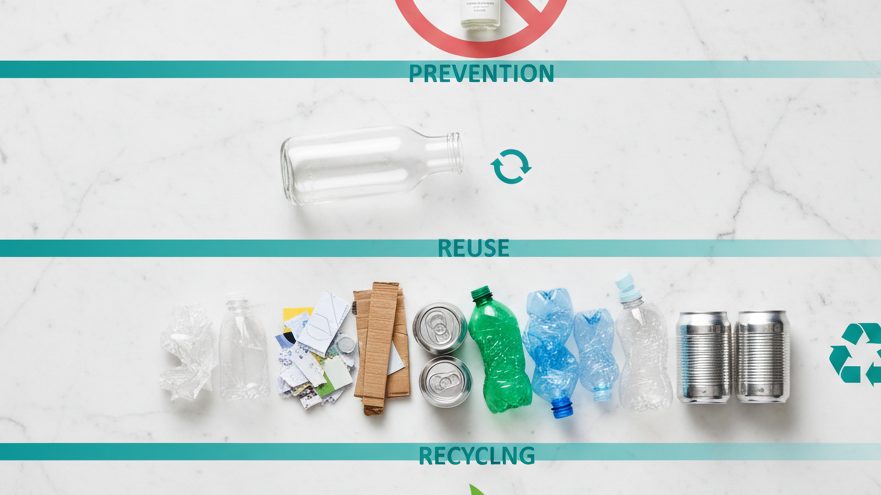
In short: Children are the most powerful agents of environmental behaviour change — not only because their habits, formed young, will shape their lifelong relationship with resources, but because children who learn about waste reduction at school actively change behaviours at home. Several studies have found that children who receive environmental education can influence their parents’ attitudes and behaviour (so-called intergenerational learning; e.g. Lawson et al., 2019, Nature Climate Change), although effects vary with programme design and context.
In the GCC, where the next generation of citizens and residents will manage the consequences of today’s waste decisions, environmental education in schools is not a supplement to the curriculum — it is an investment in the region’s environmental future. Age-Appropriate Environmental Education Foundation and Primary (Ages 4–11) At this age, waste education is most effective when it is concrete, visual, hands-on, and fun. Key activities: sorting games (correctly placing waste items into colour-coded bins builds segregation habits), compost corner (a small composting project in the classroom demonstrates biological transformation), school-based waste audit (weighing and sorting classroom waste to see what is generated), and storytelling (stories and animations about the journey of recyclables — what happens to a plastic bottle after it goes in the blue bin). Secondary (Ages 11–18) Older students can engage with greater complexity: the circular economy concept (design for disassembly, product-as-a-service), life cycle thinking (calculating the carbon and water footprint of everyday products), critical analysis of waste data (the GCC’s high per-capita generation rates), systems thinking (how does individual behaviour connect to industry, policy, and environmental outcomes?), and action projects (student-led recycling drives, waste audits, supplier engagement). Curriculum Integration in GCC Schools Waste education integrates across multiple curriculum areas: Science (decomposition, material properties, chemical reactions in composting), Geography (global waste statistics, ocean plastic, climate change), Maths (waste generation calculations, recycling rate analysis), Religious Education (Islamic teachings on environmental stewardship, Quranic verses on avoiding waste), and Design and Technology (eco-design principles, product lifecycle). Several UAE curriculum authorities have developed environmental education frameworks — sustainability programmes of the Abu Dhabi Department of Education and Knowledge (ADEK, formerly the Abu Dhabi Education Council) and the Ministry of Education’s environmental awareness units both provide frameworks for waste education integration. Engaging Parents Schools that extend their waste education programmes to families — through homework activities involving parents, family waste audit challenges, and parent engagement events — multiply their impact. A ‘family waste reduction challenge’ where students report on their household recycling rate over a month creates a positive competitive dynamic and brings sustainability home literally.
References
Show all 2 sources
- UNESCO (1997). Educating for a Sustainable Future: A Transdisciplinary Vision for Concerted Action. Paris: UNESCO (EPD-97/CONF.401/CLD.1).
- UAE Ministry of Education (2022). Environmental Education Framework. Abu Dhabi: MOE.