Qualifrost_Admin

Qualifrost_Admin

Gulf Industrial Symbiosis & Circular Economy Case Studies: Steel Slag, Fly Ash, CO₂ Mineralisation and rPET

Energy-from-waste plant beside a Gulf city at sunset

Industrial symbiosis—where the residual by-product of one industrial plant becomes the certified feedstock of another—offers the highest-tonnage circular opportunity in the GCC's heavy industrial zones (KEZAD/ICAD in Abu Dhabi, JAFZA/Dubai Industrial City, Sharjah Hamriyah, and Jubail/Yanbu in Saudi Arabia). Proven regional loops include Electric Arc Furnace (EAF) steel slag aggregate, cement kiln RDF co-processing, waste cooking oil biodiesel, and food-grade rPET bottle-to-bottle manufacturing.
Geomembrane Liner CQA Field Inspection & Hold-Point Checklist: Subgrade, GCL, Dual-Track Welding and Dipole ELL

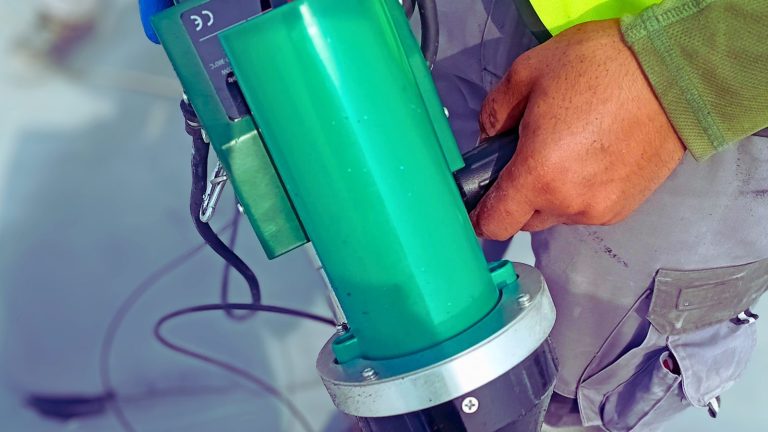
Extrusion welding of a geomembrane liner during landfill construction

Research across geoelectric leak-location surveys (Forget, Rollin & Jacquelin; Nosko & Touze-Foltz) demonstrates that 70% to 73%+ of defects in installed landfill liners occur during placement of the overlying stone drainage layer rather than at welded seams alone. A rigorous Construction Quality Assurance (CQA) field checklist must enforce hold points from subgrade proof-rolling and GCL overlap through HDPE trial welds, 100% non-destructive seam testing, protection geotextile installation, and post-gravel ASTM D7007 Dipole Electrical Leak Location.

Landfill Gas Wellfield Balancing & Troubleshooting Field Checklist: CH₄, O₂, CO, Vacuum and Subsurface Fires

Engineer monitoring a landfill gas well in the field

Balancing an active landfill gas (LFG) extraction wellfield is a precision field discipline: applying insufficient vacuum allows fugitive methane emissions and perimeter migration, whereas applying excessive vacuum ('over-pulling') draws atmospheric oxygen into the waste mass, killing anaerobic methanogens and risking subsurface spontaneous combustion. Field technicians must tune wellhead valves using calibrated 4-gas/5-gas analysers (`CH₄, CO₂, O₂, CO, H₂S`), static/differential pressure, and wellhead gas temperature.

Hazardous Waste Classification Decision Tree: Applying Basel, EWC Six-Digit Codes and TCLP in the GCC

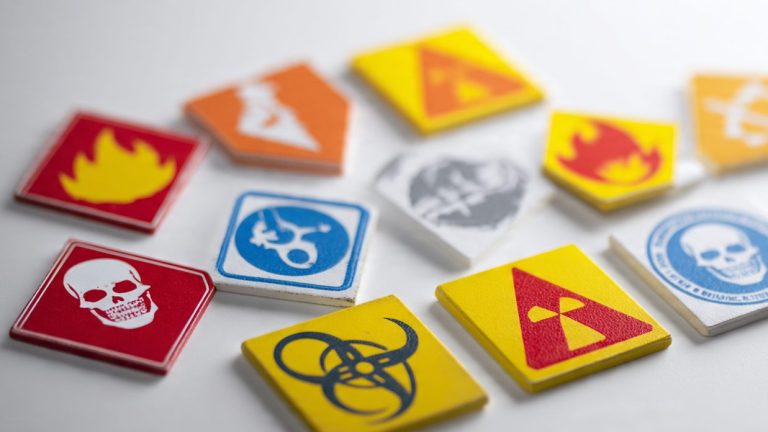
Hazard warning labels used for waste classification

Misclassifying a hazardous waste as non-hazardous exposes generators and contractors to severe regulatory penalties, landfill liner chemical attack, or worker injury, while over-classifying inert waste inflates treatment costs. A systematic 5-step classification decision tree—combining process knowledge, Safety Data Sheet (SDS) GHS hazard statements, the 20-chapter European Waste Catalogue (EWC) list, and laboratory TCLP/total threshold testing—provides an auditable determination.

EIA Screening & Scoping Checklist for Waste Infrastructure Projects in the UAE and GCC

Excavator working on a site investigation with a site operative

Before constructing a Material Recovery Facility (MRF), transfer station, composting/AD plant, Waste-to-Energy facility, or engineered landfill in the UAE or GCC, the developer must secure an Environmental Approval based on an Environmental Impact Assessment (EIA) prepared by an authority-registered environmental consultancy (e.g., EAD Class A consultant in Abu Dhabi or DM-accredited consultant in Dubai). Scoping must address hydrogeology, air dispersion (AERMOD), odour (H₂S/OU_E), noise, traffic, and cumulative impacts.

How to Run a School or Campus Waste Audit: The 6-Step Material Detective Methodology

Audited waste sample laid out by material type

A structured school or university waste audit turns abstract environmental lessons into measurable science, mathematics, and citizenship data. By auditing clean dry classroom and canteen discards over a 5-day cycle—using the Qualifrost 6-Step Material Detective Methodology (Notice, Understand, Imagine, Test Safely, Measure, Share)—students quantify per-pupil generation rates, identify single-use packaging hotspots, and design practical prevention interventions.

Safe Creative Upcycling vs. Recycling: Material Safety Screening, Hygiene Boundaries and Whole-Life Value

Disposable cup beside a reusable insulated cup

Upcycling—transforming discarded materials into products of higher functional or aesthetic value without breaking them down into raw feedstock—sits above mechanical recycling on the waste hierarchy when it genuinely replaces a new purchase and uses safe, uncontaminated inputs. However, in school, community, and commercial projects, upcycling must pass four engineering and safety gates: chemical/hygiene history, mechanical/thermal safety, glue/coating toxicity, and end-of-life recyclability.

UAE Hazardous & Industrial Waste Permitting: TCLP Characterisation, Bunded Storage and Manifest Controls

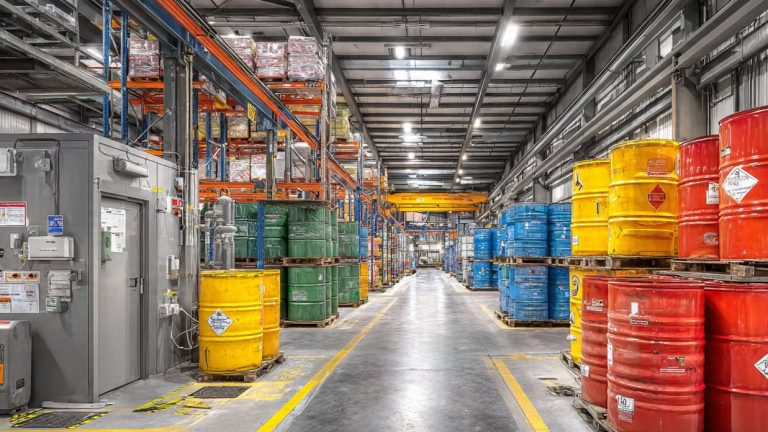
Hazardous and industrial waste drums in a permitted store

Under UAE Federal Law No. (12) of 2018 and Cabinet Resolution No. (39) of 2021, industrial generators of hazardous waste—including spent solvents, waste mineral oils, chemical sludges, blasting grit, lead-acid batteries, and asbestos—must characterize streams through ISO 17025 accredited laboratories (using TCLP Method 1311 and total contaminant analysis), store drums in shaded, bunded, ventilated bays with 110% secondary containment, and obtain prior disposal permits for treatment at licensed facilities (such as Jebel Ali in Dubai, EcoWaste/Al Dhafra in Abu Dhabi, or Al Saja'a in Sharjah).

UAE Medical & Healthcare Waste Regulation: Cabinet Resolution 39/2021, DoH Abu Dhabi and DHA/DM Standards

Colour-coded clinical waste bins in a hospital corridor

Medical and healthcare waste in the UAE is regulated under Federal Law No. (12) of 2018, Cabinet Resolution No. (39) of 2021, Cabinet Decision No. (37) of 2001, and emirate health/environmental authorities (DoH/EAD in Abu Dhabi; DHA/Dubai Municipality in Dubai; MOHAP/BEEAH in Sharjah and the Northern Emirates). Facilities must enforce strict colour-coded point-of-generation segregation (Yellow for infectious/pathological/sharps, Red/Brown for pharmaceutical/chemical, Black for domestic) and refrigerated storage prior to autoclave or rotary-kiln incineration.

UAE Extended Producer Responsibility (EPR): MOCCAE & Tadweer Packaging, Battery and E-Waste Framework

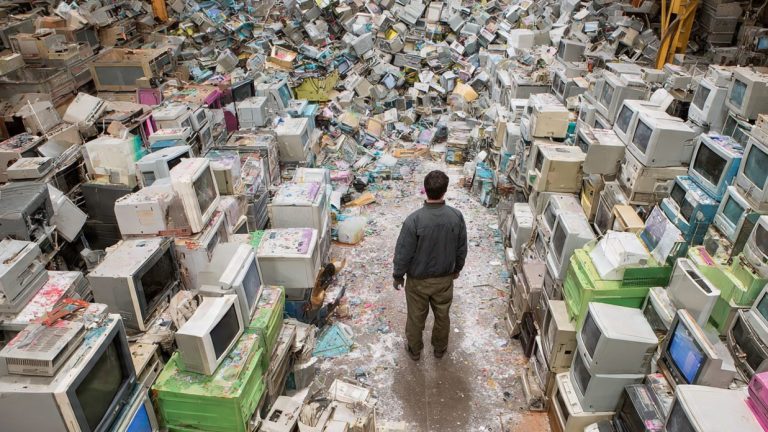
Mountain of discarded electronic equipment

Extended Producer Responsibility (EPR) in the UAE is anchored in Article 5 of Federal Law No. (12) of 2018 (Supplier and Producer Responsibility) and Cabinet Resolution No. (39) of 2021 (retailer take-back of e-waste and batteries). In July 2025, MOCCAE and Tadweer Group launched the UAE's national EPR pilot covering packaging, batteries, and electrical and electronic equipment (EEE) with 26 major brand owners to establish the Producer Responsibility Organisation (PRO) model.