

Leachate Treatment: On-Site, Off-Site and Technology Selection
In short
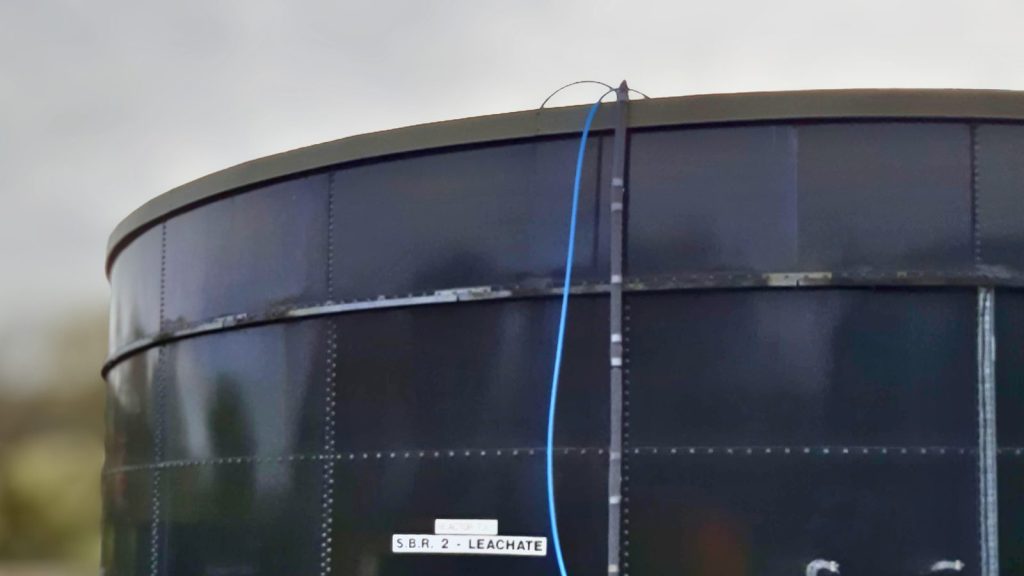
Leachate is the contaminated liquid formed when water passes through buried waste. It contains organic matter, ammonia, salts and heavy metals, and it must be collected and treated before it can be discharged or reused. The main routes are discharge to a municipal sewer, biological treatment such as a membrane bioreactor, physical separation by reverse osmosis, and evaporation. Treatment cost varies widely with plant scale, leachate strength and concentrate route, and the dominant cost is almost always disposal of the concentrated residue rather than the treatment itself. Leachate chemistry changes as a landfill ages, so a plant designed for young leachate will not suit the same site later.
- 1Collect and storeExtraction from cell sumps into lined lagoons or tanks
- 2BalanceEqualise flow and strength before treatment
- 3Biological treatmentSBR or MBR to remove ammonia and degradable organics
- 4PolishingMembranes or carbon to meet discharge limits
- 5ResidualsManage membrane concentrate and sludge
- 6Discharge or tankerTo sewer, watercourse or treatment works under consent
Key facts
- Operating costs vary widely with plant scale, leachate strength and concentrate route; full-scale membrane plants with concentrate management are commonly reported at several US dollars per m³ or more. Costs are lower where a permitted marine outfall removes the evaporator stage. Verify against independent cost studies.
- Capital cost for a 100–500 m³/day plant is roughly USD 0.6M–4.2M [1]
- Concentrate disposal dominates operating cost — reverse osmosis recovers about 90% as clean permeate, leaving 10% as concentrate needing a route [2]
- US federal rules (40 CFR 258.40(a)(2)) require collection systems to be designed to maintain less than 30 cm of leachate head over the liner; this is widely used as a design benchmark. Check the site’s own permit for the applicable limit [3]
- Discharge to public sewer is the cheapest route where permitted, but surcharges apply for organic and ammonia loading [2]
- One published comparison (hazardous-waste landfill context) put evaporation-pond operating cost at about USD 8/m³ against about USD 40/m³ for distillation [4]
- Dubai Law 18/2024 requires a Dubai Municipality permit for treatment facilities (Art. 14) [5]
Plain English — the essentials, in everyday language
Plain English
What is leachate?
Leachate is the liquid that drains out of buried waste. Rain falling on a landfill, plus moisture already inside the waste, trickles down through the layers. On the way it picks up whatever dissolves.
The result is a dark, strong-smelling liquid containing organic matter, ammonia, salts and traces of metals. It is far more concentrated than domestic sewage. Untreated, it would contaminate any groundwater it reached.
Why it changes over time
This surprises people. Leachate from a young landfill is chemically different from leachate at the same site twenty years later.
Young leachate is rich in easily degradable organic matter and fairly acidic. Biological treatment works well on it, because there is plenty for bacteria to eat.
Mature leachate has much less degradable organic matter but high ammonia. Bacteria struggle, so physical or chemical methods are needed instead.
A treatment plant built for one stage will underperform at the other. Good design plans for the change from the beginning.
The main treatment options
Send it to the sewer. Where a water authority will accept it, this is usually cheapest. The catch is that authorities charge extra for high organic and ammonia loads, and some are no longer willing to accept leachate at all [2].
Treat it biologically. A membrane bioreactor, or MBR, combines bacteria with a fine filter. Bacteria digest the organic matter, and the membrane holds back solids. It works well on younger leachate.
Filter it under pressure. Reverse osmosis forces leachate through a membrane so fine that only water passes. Around 90% comes out clean enough to discharge [2]. It works on any age of leachate, which is its main strength.
Evaporate it. Let the sun and heat remove the water, leaving solids behind. In hot dry climates this is simple and cheap to run.
The catch nobody mentions
Reverse osmosis produces clean water — and a concentrated residue holding everything removed. That residue is roughly 10% of the original volume but contains close to 100% of the contamination [2].
Dealing with that concentrate is usually the largest single running cost. Any proposal that quotes a treatment price without stating where the concentrate goes is incomplete.
What it costs
Running costs vary widely with plant size, leachate strength and where the concentrate goes. Full-scale membrane plants that must manage their concentrate commonly cost several US dollars per cubic metre or more to run. A coastal site with a permitted outfall can operate at lower cost. A plant needing an evaporator for its concentrate sits at the top of the range. Check any budget against independent cost studies.
Capital cost for a mid-sized plant handling 100 to 500 cubic metres a day runs from about USD 0.6 million to USD 4.2 million [1].
In the UAE and the Gulf
Across the UAE and the wider GCC, less rain means less leachate — but it is stronger. Volumes are lower than in northern Europe, so plants are smaller. The liquid that does form is more concentrated, because there is less rainwater diluting it. Smaller plant, harder job.
Evaporation genuinely works here. High temperatures, low humidity and available land make evaporation ponds practical across the Gulf in a way they are not in Britain. One published comparison, in a hazardous-waste landfill context, put evaporation-pond operating cost at around USD 8 per cubic metre against USD 40 for distillation [4].
Salt is the limiting factor. Evaporation removes water and leaves everything else behind. Salts build up until the residue must be dug out and disposed of as a waste in its own right. Plan for that from day one.
A permit is required. Under Dubai Law 18/2024, treatment facilities need a Dubai Municipality permit (Art. 14) [5].
Professional layer — engineering, operations & compliance detail (click to expand)
Professional
Technology selection matrix
| Route | Best suited to | Relative OPEX | Principal constraint |
|---|---|---|---|
| Sewer discharge | Any age, near a willing WWTP | Lowest available | Acceptance and surcharges [2] |
| MBR | Young leachate, high BOD | Moderate; site-specific | Poor on mature, high-ammonia leachate |
| MBR + RO | Any age, strict consent | Higher than MBR alone | Concentrate management |
| RO with ZLD | Any age, no discharge route | Highest of the routes listed | Capital intensive; energy |
| Evaporation pond | Arid, land available | ~USD 8/m³ in one comparison [4] | Salt accumulation; land take |
| Marine outfall | Coastal, permitted | Low where permitted | Permit availability |
Costs fall with scale. Per-cubic-metre cost is higher for small packaged units than for large treatment trains. Obtain site-specific quotations and verify them against independent cost studies rather than vendor benchmarks. Below roughly 100 m³/day, tankering to a licensed facility often beats building anything.
Designing for changing chemistry
Specify against a design envelope, not a single sample:
| Stage | BOD:COD ratio | Ammonia | Implication |
|---|---|---|---|
| Acidogenic (young) | > 0.4 | Moderate | Biological treatment effective |
| Methanogenic (mature) | < 0.1 | High, persistent | Biological alone insufficient |
The EU Landfill Directive requires leachate collection and control as a condition of permit, and treatment to a standard suitable for discharge [7].
Ammonia is the parameter that catches people out. It persists long after organic load falls away, and it is the constituent most likely to breach a discharge consent in year fifteen of a twenty-five-year permit. Where mature-phase operation is foreseeable, provide space and services for an ammonia stripping stage even if it is not installed on day one.
Concentrate management
For a reverse osmosis plant recovering 90% permeate, the residual 10% carries essentially the whole contaminant load [2]. Options:
- Recirculation to the waste mass. Common, cheap, but concentrates salts within the landfill over time and increases long-term liability
- Forced-circulation evaporation. Reliable, energy-intensive, produces a solid residue needing disposal
- Deep well injection. Available only where geology and regulation permit
- Solidification and landfilling. Straightforward where the site accepts its own residue
Model concentrate disposal as its own cost line. Treatment plants are frequently procured on a headline per-cubic-metre treatment price with the concentrate route left unresolved, which is where budgets fail.
Arid-climate design specifics
- Evaporation is a process, not just a pond. Rate depends on surface area, humidity and wind. Calculate against site-specific meteorological data, not regional averages
- Salinity rises through the pond series. Design as staged cells so that crystallising cells can be taken out of service and excavated without stopping the plant
- Membrane fouling accelerates at higher temperature. Biofouling is the reported primary operational barrier on full-scale RO leachate plants [6]. Specify pretreatment and a cleaning-in-place regime, and budget membrane replacement realistically
- Dust and sand ingress affect open tanks and pond surfaces. Include desilting access in the design
PFAS and emerging contaminants
Per- and polyfluoroalkyl substances are increasingly regulated in Europe and North America and appear in landfill leachate. Reverse osmosis rejects most PFAS into the concentrate stream, so they accumulate in the residue rather than being destroyed [2]. Where a site recirculates concentrate to the waste mass, PFAS accumulate rather than leave. Any site with a foreseeable PFAS consent should treat recirculation as a temporary measure.
Practitioner notes
- Sample across seasons before designing. A single sample sets you up to build the wrong plant. Twelve months of monthly data is the minimum defensible basis
- Check the receiving works before assuming sewer discharge. Acceptance can be withdrawn at renewal, and a plant designed around sewer discharge has no fallback
- Pumps, not plants, cause permit breaches. Exceeding the leachate head limit in the site permit (the US 30 cm design benchmark [3] is a common reference) is caused by sump pump failure far more often than by treatment underperformance. Duty, standby and telemetered level alarms are cheaper than regulatory enforcement action
- Design to lender standards where project finance is involved. The IFC EHS Guidelines for Waste Management Facilities are the benchmark most financiers apply [8], and UK Environment Agency leachate management guidance is the closest equivalent operational reference in English [9]
- Get the concentrate route permitted before ordering the RO skid. It is the longest lead item in the whole project and it is not on the equipment supplier’s critical path
Common questions
What is leachate? The liquid that forms when water passes through buried waste, picking up dissolved contamination on the way. It contains organic matter, ammonia, salts and traces of metals, and is far stronger than domestic sewage.
Can leachate be discharged to a normal sewer? Sometimes, where the water authority accepts it. It is usually the cheapest route, but surcharges apply for high organic and ammonia loading and acceptance is becoming harder to obtain [2].
How much does leachate treatment cost? It varies widely with scale, leachate strength and the concentrate route. Full-scale membrane plants with concentrate management are commonly reported at several US dollars per cubic metre or more, and coastal sites with a permitted outfall can run at lower cost. Verify budgets against independent cost studies and site-specific quotations.
Why does reverse osmosis need something else afterwards? It separates clean water from contamination but does not destroy anything. Around 10% of the input leaves as concentrate carrying nearly all the pollutants, and that stream needs its own disposal route [2].
Do evaporation ponds work in the Gulf? Yes. High temperatures, low humidity and available land make them practical, and one published comparison found pond operating costs well below distillation [4]. The limit is salt: it accumulates and must eventually be excavated and disposed of.
References
Show all 9 sources
- HydroPure (2026) Landfill Leachate Wastewater Treatment: 2026 Process Guide. CAPEX and OPEX benchmarks by plant capacity. Available at: https://hydropurewater.com/blog/6427-landfill-leachate-wastewater-treatment-2026-process-guide.html (Accessed: 25 August 2026).
- MSW Management (2021) Up to the Challenge: leachate management costs and technologies. Reports RO permeate recovery of up to 90% and comparative disposal costs. Available at: https://www.mswmanagement.com/landfills/leachate/article/21162032/up-to-the-challenge (Accessed: 25 August 2026).
- United States (2024) 40 CFR Part 258 — Criteria for Municipal Solid Waste Landfills, §258.40. eCFR. Available at: https://www.ecfr.gov/current/title-40/chapter-I/subchapter-I/part-258/subpart-D (Accessed: 25 August 2026).
- Cost-Effective Leachate Treatment and Resource Recovery in Hazardous Waste Landfills through Pipe Freeze Crystallization (2025). PMC11956536. Comparative economics of evaporation ponds, distillation and freeze crystallisation. Available at: https://pmc.ncbi.nlm.nih.gov/articles/PMC11956536/ (Accessed: 25 August 2026).
- Government of Dubai (2024) Law No. (18) of 2024 Regulating Waste Management in the Emirate of Dubai, Art. 14. Dubai Legislation Portal. Available at: https://dlp.dubai.gov.ae/en (Accessed: 25 August 2026). Arabic text prevails.
- Cost estimation of landfill leachate treatment by reverse osmosis in a Brazilian landfill (2023). Full-scale RO study identifying biofouling as the primary operational barrier. Available at: https://www.academia.edu/104656738/Cost_estimation_of_landfill_leachate_treatment_by_reverse_osmosis_in_a_Brazilian_landfill (Accessed: 25 August 2026).
- European Union (1999) Council Directive 1999/31/EC on the landfill of waste, Annex I (leachate collection and control). Available at: http://data.europa.eu/eli/dir/1999/31/oj (Accessed: 25 August 2026).
- International Finance Corporation (2007) Environmental, Health, and Safety Guidelines for Waste Management Facilities. World Bank Group. Available at: https://www.ifc.org/en/insights-reports/general-environmental-health-and-safety-guidelines/ehs-guidelines-infrastructure (Accessed: 25 August 2026).
- UK Environment Agency (2024) Landfill operator guidance: leachate management. Available at: https://www.gov.uk/government/organisations/environment-agency (Accessed: 25 August 2026).
Related articles
Start here – Sanitary Landfill Design
Related – Landfill Gas (LFG) Management – Landfill Closure & Post-Closure – Bioreactor Landfills – Arid Climate Landfill Considerations
Go deeper – Industrial Wastewater Treatment – Desalination Brine Management – Sludge Management – Environmental Permitting
About this article
Charmaine Frost is a landfill gas and waste-management specialist and a founding director of Qualifrost FZC LLC. Her experience was gained with major UK waste-management companies, covering landfill gas generation and collection systems, environmental monitoring and the practical risks of landfill operations. She holds the NEBOSH International General Certificate and has submitted her final NEBOSH Diploma assessment, with results expected in March–April 2027.
Reviewed by Adrian Frost, Director. Every article is checked against primary sources before publication: legal claims are verified against the instrument itself, and figures against the original dataset.
Published 25 August 2026 · Last reviewed 25 August 2026 · Next review August 2027, or sooner if the law changes.