

UAE Free Zone Environmental & Waste Compliance: JAFZA/Trakhees, KEZAD, DMCC, SAIF Zone and AFZ
In short: Operating inside a UAE free zone does not exempt a business from UAE federal environmental and climate laws. Both Federal Law No. (12) of 2018 on Integrated Waste Management (Article 3) and Federal Decree-Law No. (11) of 2024 on Climate Change (Article 3) expressly apply across all UAE free zones, while free zone authorities (such as PCFC/Trakhees in JAFZA, EAD/KEZAD in Abu Dhabi, SAIF Zone in Sharjah, and Ajman Free Zone) enforce additional zone-level EHS permits, inspections, and waste manifest rules.
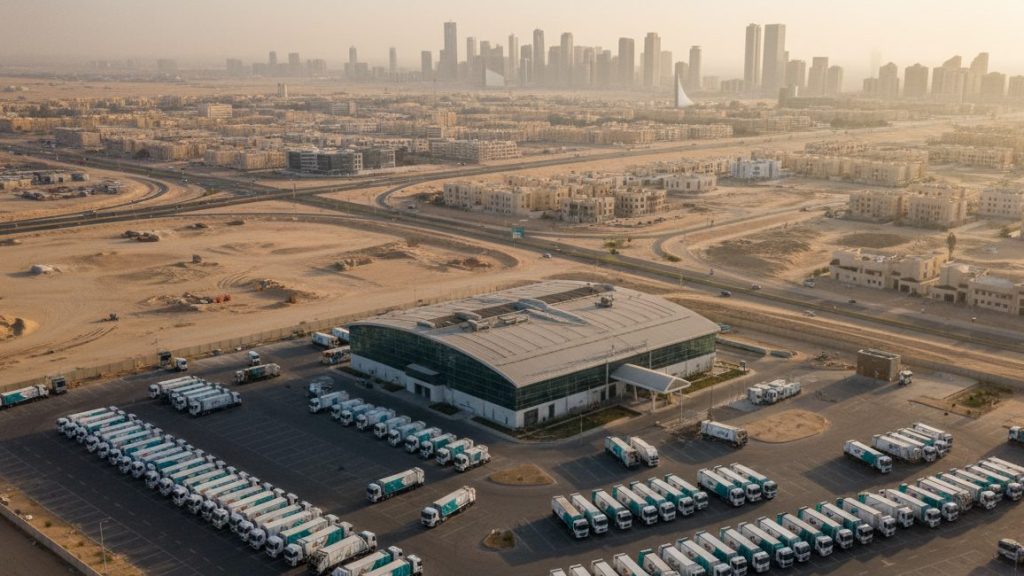
Key facts
- Federal Law No. (12) of 2018 Art. 3 and Federal Decree-Law No. (11) of 2024 Art. 3 expressly apply inside all UAE free zones [1].
- In PCFC/Trakhees-regulated zones (e.g. JAFZA, Dubai Maritime City), Trakhees enforces Environmental Control Rules alongside Dubai Municipality waste disposal permits [2].
- In KEZAD (Khalifa Economic Zones Abu Dhabi), industrial tenants must obtain EAD environmental licences and log waste in Bolisaty [3].
- In Sharjah (SAIF Zone / Hamriyah Free Zone) and Ajman Free Zone, tenants must use authority-approved waste contractors and obtain annual EHS renewal NOCs [4].
Plain English — the essentials, in everyday language
Plain English
Busting the ‘Free Zone Exemption’ myth
While UAE free zones offer tax, customs, and foreign-ownership incentives, environmental, waste, and climate laws apply in full inside every free zone [1]. Whether your warehouse or factory is in Jebel Ali Free Zone (JAFZA), Khalifa Economic Zones Abu Dhabi (KEZAD), Hamriyah Free Zone, or Ajman Free Zone (AFZ), you must comply with federal waste and GHG laws AND the free zone authority’s own Health, Safety, and Environment (EHS) regulations.
Why free zone gate passes matter for waste removal
In industrial free zones, waste trucks cannot simply drive out of the security gate. Removing scrap, industrial by-products, or hazardous waste from a free zone typically requires both an environmental manifest/disposal permit and a Free Zone Gate Pass / Customs Declaration (since moving recyclable scrap from a bonded free zone into the UAE mainland can trigger customs duty and VAT considerations).
Professional layer — engineering, operations & compliance detail (click to expand)
Professional
Zone-by-Zone Regulatory Interface Matrix
1. JAFZA, Dubai Maritime City & PCFC Zones (Trakhees EHS): Industrial facilities require a Trakhees Environmental Control Approval (ECA) and Operational Fitness Certificate (OFC); hazardous waste disposal must still be permitted via Dubai Municipality’s WDS portal and transported by DM/Trakhees-approved carriers [2]. Trakhees does not regulate every Dubai free zone: DMCC, DIFC, Dubai South and other non-PCFC zones have separate arrangements. DMCC tenants should therefore confirm their environmental competent authority (commonly Dubai Municipality) directly with DMCC and Dubai Municipality before applying for permits. 2. KEZAD & ICAD (Abu Dhabi): Regulated directly by EAD for environmental permitting and Bolisaty manifests, with KEZAD Group EHS monitoring plot-level storage and trade effluent [3]. 3. Hamriyah Free Zone & SAIF Zone (Sharjah): Zone EHS departments enforce on-site storage and mandate collection via BEEAH or zone-authorized hazardous contractors [4]. 4. Ajman Free Zone (AFZ) & RAKEZ: Require environmental clearance with AMPD / EPDA-RAKWMA for industrial waste streams.
Practitioner Checklist for Free Zone Industrial Tenants
1. Maintain secondary containment (110% of largest drum/IBC volume) for all liquid chemicals and waste oils. 2. Align free zone customs scrap-disposal gate passes with municipal weighbridge destruction certificates so inventory audits balance. 3. Register free zone facilities on MOCCAE’s mrv.ae platform for Scope 1 and Scope 2 GHG reporting under FDL 11/2024.
Common questions
Do free zone companies need to comply with the UAE single-use plastics ban?
Yes. Ministerial Resolution No. 380 of 2022 applies across all UAE markets, with an exemption only for products manufactured strictly for export/re-export outside the UAE [1].
Who issues the hazardous waste disposal permit for a factory inside JAFZA?
While Trakhees regulates on-site EHS and issues the facility’s Operational Fitness Certificate, hazardous waste destined for Dubai Municipality’s Jebel Ali treatment facility requires a Dubai Municipality WDS disposal approval [2].
References
Show all 4 sources
- United Arab Emirates (2018) Federal Law No. (12) of 2018 on Integrated Waste Management, Art. 3. Available at: https://elaws.moj.gov.ae
- Ports, Customs and Free Zone Corporation — Trakhees (2025) Environment, Health and Safety (EHS) Regulations and Guidelines. PCFC. Available at: https://www.pcfc.ae
- KEZAD Group & EAD (2025) Industrial Environmental Permitting Guidelines in Abu Dhabi. Available at: https://www.kezadgroup.com
- Ajman Free Zone (2025) EHS and Sustainability Guidelines. AFZ. Available at: https://www.afz.ae
About this article
Charmaine Frost is a landfill gas and waste-management specialist and a founding director of Qualifrost FZC LLC, drawing on UK Tier-1 operational and engineering experience with major waste-management companies. She holds the NEBOSH International General Certificate and has submitted her final NEBOSH Diploma assessment, with results expected in March–April 2027.
Reviewed by Adrian Frost, Director. Checked against primary statutory instruments and recognised technical standards.