Category Regulation & Compliance

UAE Hazardous & Industrial Waste Permitting: TCLP Characterisation, Bunded Storage and Manifest Controls
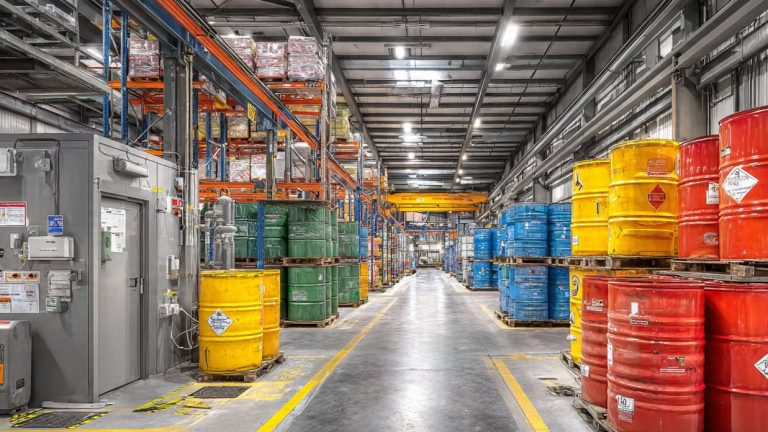
Hazardous and industrial waste drums in a permitted store

Under UAE Federal Law No. (12) of 2018 and Cabinet Resolution No. (39) of 2021, industrial generators of hazardous waste—including spent solvents, waste mineral oils, chemical sludges, blasting grit, lead-acid batteries, and asbestos—must characterize streams through ISO 17025 accredited laboratories (using TCLP Method 1311 and total contaminant analysis), store drums in shaded, bunded, ventilated bays with 110% secondary containment, and obtain prior disposal permits for treatment at licensed facilities (such as Jebel Ali in Dubai, EcoWaste/Al Dhafra in Abu Dhabi, or Al Saja'a in Sharjah).

UAE Medical & Healthcare Waste Regulation: Cabinet Resolution 39/2021, DoH Abu Dhabi and DHA/DM Standards

Colour-coded clinical waste bins in a hospital corridor

Medical and healthcare waste in the UAE is regulated under Federal Law No. (12) of 2018, Cabinet Resolution No. (39) of 2021, Cabinet Decision No. (37) of 2001, and emirate health/environmental authorities (DoH/EAD in Abu Dhabi; DHA/Dubai Municipality in Dubai; MOHAP/BEEAH in Sharjah and the Northern Emirates). Facilities must enforce strict colour-coded point-of-generation segregation (Yellow for infectious/pathological/sharps, Red/Brown for pharmaceutical/chemical, Black for domestic) and refrigerated storage prior to autoclave or rotary-kiln incineration.

UAE Extended Producer Responsibility (EPR): MOCCAE & Tadweer Packaging, Battery and E-Waste Framework

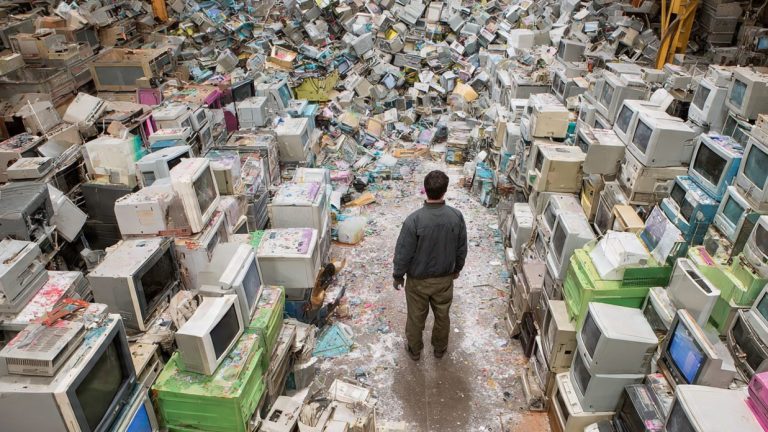
Mountain of discarded electronic equipment

Extended Producer Responsibility (EPR) in the UAE is anchored in Article 5 of Federal Law No. (12) of 2018 (Supplier and Producer Responsibility) and Cabinet Resolution No. (39) of 2021 (retailer take-back of e-waste and batteries). In July 2025, MOCCAE and Tadweer Group launched the UAE's national EPR pilot covering packaging, batteries, and electrical and electronic equipment (EEE) with 26 major brand owners to establish the Producer Responsibility Organisation (PRO) model.

Dubai Single-Use Plastics & Packaging Compliance Guide: Executive Council Resolution No. (124) of 2023

Cart of collected plastic waste

Dubai Executive Council Resolution No. (124) of 2023—operating alongside Federal Ministerial Resolution No. (380) of 2022—implemented a phased prohibition across all retail, hospitality, food delivery, and commercial establishments in Dubai: banning single-use plastic bags from 1 January 2024, non-plastic single-use bags below 50 microns from 1 June 2024, and single-use plastic stirrers, table covers, cups, styrofoam food containers, straws, and cutlery by 2025–2026.

Abu Dhabi Construction & Demolition (C&D) Waste SOP: Recycled Aggregate Quotas and Site Plans

Excavator demolishing a building amid construction rubble

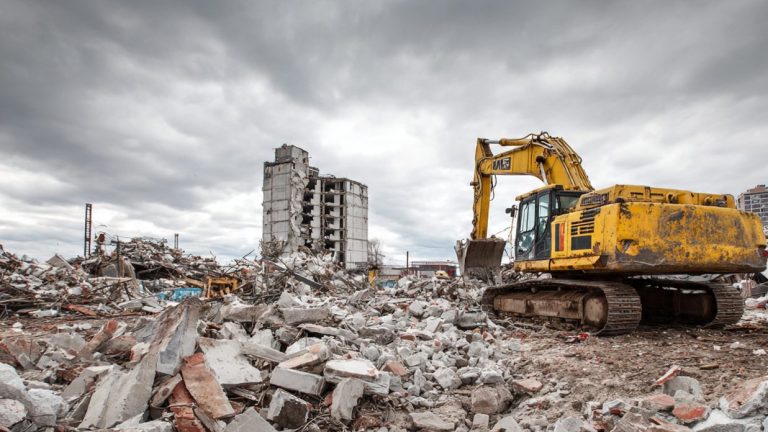
Under the Environment Agency – Abu Dhabi (EAD) Standard Operating Procedure for Construction and Demolition Waste and Tadweer Group operational rules, all construction, infrastructure, and demolition projects in Abu Dhabi must prepare a site Waste Management Plan (WMP), segregate inert concrete and masonry from wood, metals, gypsum, and hazardous waste, and route C&D mineral streams to approved crushing plants (such as Al Dhafra) to meet mandated recycled roadbase utilization quotas.

Asia-Pacific & Australian Circular Benchmarks: Japan’s Sound Material-Cycle Society and Australian EPA Frameworks

Recycling line returning recovered materials to sorted streams

Japan's Basic Act for Establishing a Sound Material-Cycle Society (2000) and stream-specific recycling laws (Home Appliances, Containers & Packaging, Construction Materials, Food, and End-of-Life Vehicles), alongside Australia's National Waste Policy Action Plan (80% recovery target by 2030) and state EPA landfill levies, provide proven models for high-density urban resource efficiency and arid-climate C&D recovery.

United States Waste Regulation Benchmark: RCRA Subtitle C & D, CERCLA (Superfund) and EPA Standards

Dozer working a municipal waste landfill

The United States federal waste framework rests on the Resource Conservation and Recovery Act (RCRA)—which divides regulation between Subtitle D (non-hazardous municipal solid waste landfills under 40 CFR Part 258) and Subtitle C ('cradle-to-grave' hazardous waste management under 40 CFR Parts 260–270)—supplemented by CERCLA (Superfund) strict joint-and-several remediation liability and Clean Air Act NSPS Subpart XXX landfill methane emission rules.

United Kingdom Waste Regulation Benchmark: Environmental Protection Act 1990 (s.34) and Environment Act 2021

Restored landfill in the English countryside

United Kingdom waste legislation—centered on Section 34 of the Environmental Protection Act 1990 (Duty of Care), the Environmental Permitting Regulations 2016, the Landfill Tax escalator, and the Environment Act 2021—demonstrates how fiscal pricing, strict operator competence (CIWM/WAMITAB), and digital waste tracking transform a landfill-dependent economy into an integrated recovery system.

European Union Waste Law Benchmark: Waste Framework Directive 2008/98/EC, Landfill Directive and EWC Codes

International policy conference on resources and waste

The European Union's waste legislative acquis—anchored by the Waste Framework Directive (2008/98/EC, amended by 2018/851), the Landfill Directive (1999/31/EC), and the European List of Waste (Decision 2000/532/EC)—serves as the primary technical reference for waste classification, End-of-Waste criteria, and landfill engineering across the GCC, including Abu Dhabi EAD's six-digit waste coding system.

UAE Free Zone Environmental & Waste Compliance: JAFZA/Trakhees, KEZAD, DMCC, SAIF Zone and AFZ

Vehicle depot in a Gulf industrial zone

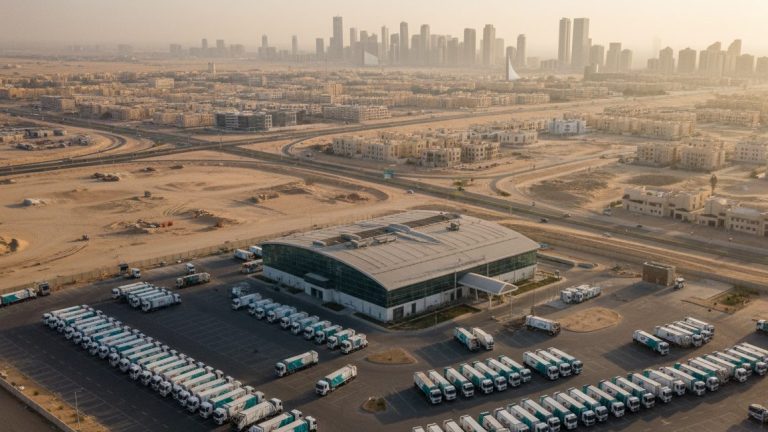
Operating inside a UAE free zone does not exempt a business from UAE federal environmental and climate laws. Both Federal Law No. (12) of 2018 on Integrated Waste Management (Article 3) and Federal Decree-Law No. (11) of 2024 on Climate Change (Article 3) expressly apply across all UAE free zones, while free zone authorities (such as PCFC/Trakhees in JAFZA, EAD/KEZAD in Abu Dhabi, SAIF Zone in Sharjah, and Ajman Free Zone) enforce additional zone-level EHS permits, inspections, and waste manifest rules.