

GCC Waste Infrastructure Market & Project Pipeline: WtE, MRF, Hazardous Treatment and PPP Investment Outlook
In short: Driven by binding 2027–2035 landfill diversion mandates and sovereign green finance, the GCC waste management infrastructure pipeline exceeds USD 35 to 45 billion in planned CAPEX through 2035. Flagship public-private partnerships (PPPs)—including the 1.9 Mt/yr Dubai Warsan WtE plant, the 300,000 t/yr Sharjah WtE plant, the 900,000 t/yr Abu Dhabi Al Wathba WtE project, Oman’s Barka WtE, and Saudi Arabia’s SAR 120 billion MWAN/SIRC build-out—anchor a structural shift from haul-and-dump contracts to long-term BOO/BOOT concessions.
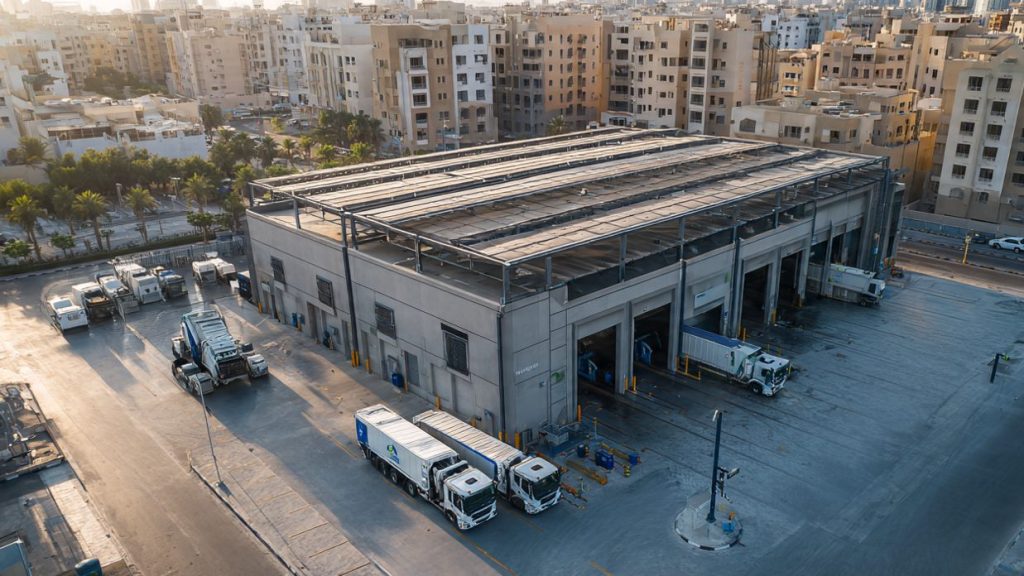
Key facts
- Dubai’s Warsan Waste-to-Energy facility (1.9 Mt/yr, ~200 MWe, USD 1.1+ billion CAPEX) is among the largest single-site WtE plants globally [1].
- Sharjah’s Emirates Waste to Energy plant (300,000 t/yr, 30 MWe) was the GCC’s first commercial municipal WtE facility [2].
- Abu Dhabi (Tadweer / EWEC) is developing the ~900,000 t/yr (~100 MWe) Abu Dhabi Waste-to-Energy IPP alongside Al Dhafra C&D and rPET plants [3].
- Saudi Arabia’s MWAN and SIRC (PIF wholly owned subsidiary) are executing a SAR 120+ billion circular infrastructure programme targeting 82% diversion by 2035 [4].
Plain English — the essentials, in everyday language
Plain English
Why the Gulf is experiencing a historic waste infrastructure boom
For decades, municipal waste management in the Gulf meant buying compactor trucks and excavating unlined desert dumpsites. Today, land near expanding cities is too valuable for dumpsites, climate laws penalise landfill methane, and national visions (UAE Net Zero 2050, Saudi Vision 2030, Oman Vision 2040, Qatar National Vision 2030) mandate 75% to 100% diversion from landfill. That policy shift has unlocked a multi-decade capital investment cycle across Material Recovery Facilities (MRFs), C&D recycling hubs, hazardous waste incinerators, and megawatt-scale Waste-to-Energy (WtE) power stations [1][4].
How Public-Private Partnerships (PPPs) fund billion-dollar waste plants
Rather than paying the entire construction cost of a Waste-to-Energy plant out of the municipal budget on day one, Gulf governments use Build-Own-Operate-Transfer (BOOT) concessions (typically 25 to 35 years). An international and regional consortium finances, builds, and operates the plant, earning two steady revenues: a Gate Fee (Tipping Fee) per tonne of waste delivered by the municipality, and a Power Purchase Agreement (PPA) tariff per kilowatt-hour of electricity sold to the grid [1][3].
Professional layer — engineering, operations & compliance detail (click to expand)
Professional
Landmark GCC Waste Infrastructure Projects & Capacities
1. Dubai Warsan Waste-to-Energy (UAE): 1.9 million tonnes/year (5,666 t/day across 5 grate lines), ~200 MWe output; developed under a 35-year concession with Dubai Municipality by Itochu, Hitachi Zosen Inova, BESIX, Dubai Holding, and Tech Group [1]. 2. Sharjah Waste-to-Energy (UAE): 300,000 tonnes/year, 30 MWe; developed by Emirates Waste to Energy (BEEAH Group & Masdar) [2]. 3. Abu Dhabi Waste-to-Energy IPP (UAE): ~900,000 tonnes/year, ~90–100 MWe procured by EWEC and Tadweer Group [3]. 4. Saudi Arabia (SIRC & MWAN): Over 800+ planned facilities across 25 geographic clusters—including Riyadh C&D recycling (processing millions of tonnes for Green Riyadh/Diriyah), industrial hazardous waste rotary kilns in Jubail/Yanbu, and regional MRFs [4]. 5. Oman (be’ah): Barka WtE (~1,600–2,200 t/day), Liwa/Sohar integrated hazardous waste treatment complex, and cement-kiln RDF lines.
Bankability Allocation in GCC Waste PPP Concessions
In project finance due diligence for GCC waste PPPs, the four decisive risk allocations are: (1) Minimum Guaranteed Tonnage (Put-or-Pay / Take-or-Pay) protecting debt service if municipal waste volumes or composition shift; (2) Calorific Value Band Adjustment, adjusting throughput guarantees if as-received LHV moves outside the 7.5–11.5 MJ/kg design window; (3) Incinerator Bottom Ash (IBA) & Air Pollution Control Residue (APCr) Offtake, specifying whether the municipality or concessionaire bears hazardous APCr stabilisation and disposal costs; and (4) Change-in-Law Protection for future flue-gas or carbon-pricing rules.
Common questions
What are the two main revenue streams of a GCC Waste-to-Energy BOOT project?
A Waste-to-Energy BOOT project earns (1) an availability/tonnage Gate Fee paid by the municipality under the Waste Treatment Agreement, and (2) an electricity tariff paid by the grid off-taker (such as DEWA, EWEC, or SEWA) under a long-term Power Purchase Agreement (PPA) [1][3].
Who is SIRC in Saudi Arabia’s waste sector?
The Saudi Investment Recycling Company (SIRC) is a wholly owned subsidiary of Saudi Arabia’s Public Investment Fund (PIF), established to develop, own, and co-invest in national recycling, C&D, hazardous waste, and energy-recovery infrastructure across the Kingdom [4].
References
Show all 4 sources
- Dubai Municipality (2025) Warsan Waste Management Centre — Dubai Waste-to-Energy Project. Available at: https://www.dm.gov.ae
- BEEAH Group and Masdar (2024) Emirates Waste to Energy — Sharjah WtE Facility. Available at: https://beeah.com
- Emirates Water and Electricity Company — EWEC & Tadweer Group (2025) Abu Dhabi Waste-to-Energy Independent Power Producer Project. Available at: https://www.ewec.ae
- Saudi Investment Recycling Company — SIRC & MWAN (2025) Circular Economy Investment Strategy in Saudi Arabia. Available at: https://sirc.sa
About this article
Charmaine Frost is a landfill gas and waste-management specialist and a founding director of Qualifrost FZC LLC, drawing on UK Tier-1 operational and engineering experience with major waste-management companies. She holds the NEBOSH International General Certificate and has submitted her final NEBOSH Diploma assessment, with results expected in March–April 2027.
Reviewed by Adrian Frost, Director. Checked against primary statutory instruments and recognised technical standards.