

Global Waste Benchmarks: How the GCC Compares to the World
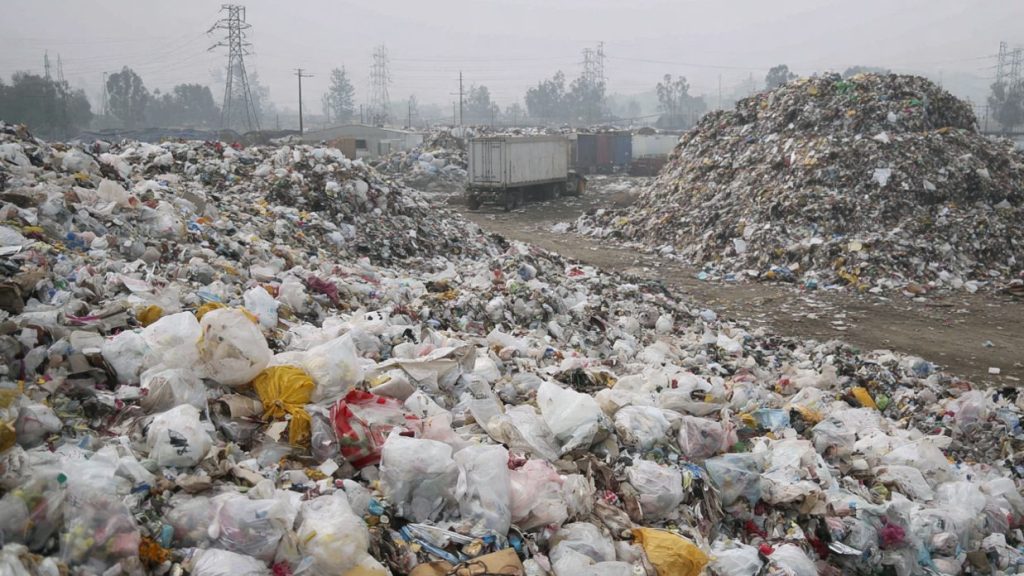
In short: Contextualising GCC waste performance against global benchmarks reveals both the scale of the challenge and the magnitude of the opportunity. The Gulf sits in a distinctive position: per- capita waste generation at the high end globally, disposal rates historically dominated by landfill, but with the financial resources, policy ambition, and infrastructure investment capacity to leapfrog the incremental transitions that took European countries decades.
This article provides the key global benchmarks against which GCC performance should be assessed. Per-Capita Waste Generation: Global League Table Global per-capita MSW generation averages approximately 0.74 kg/cap/day (World Bank 2018). The range is vast: from about 0.1 kg/cap/day in the lowest-generating countries to over 4 kg/cap/day in the highest-consuming nations (World Bank 2018). The GCC (1.5–2.1 kg/cap/day) sits in the upper tier — comparable to the USA (2.0 kg/cap/day) and significantly above Western Europe (1.2 kg/cap/day) and China (0.7 kg/cap/day). The most commonly cited reason for Gulf per-capita rates being above European equivalents is the high proportion of food and packaging waste from the region’s food-centric culture and intensive take-away food consumption. Recycling and Diversion Rates Recycling rate comparisons between jurisdictions require careful interpretation due to definitional inconsistencies (what counts as recycling?) and data quality variations. With those caveats:
- Germany: 67% recycling rate for municipal waste — the global benchmark for high- performing recycling systems, built on decades of source segregation infrastructure and EPR.
- South Korea: 59% recycling — the weight-based pay-as-you-throw (PAYT) system has been transformative.
- EU average: 49% recycling — the 2025 target is 55%.
- USA: 32% recycling and composting combined.
- GCC range: roughly 10–35% MSW diversion for most cities (widely varying by emirate/city, waste stream, and definition; company-reported figures covering all waste streams, including C&D, can be far higher). Dubai officially reports approximately 34% diversion (2023); Abu Dhabi’s MSW diversion (overseen by Tadweer) should be verified against current Tadweer/SCAD data; Sharjah’s Bee’ah has claimed approximately 76% landfill diversion across all waste streams (company-reported); the Kingdom of Saudi Arabia baseline is approximately 20% diversion.
Landfill Rates While Europe has dramatically reduced landfill rates (EU average approximately 24% of MSW landfilled in 2021; Germany, Netherlands, Belgium, Denmark — all below 5%), the GCC’s historical baseline has been close to 100% landfill for MSW. The rapid trajectory of change — driven in the UAE by WtE (e.g. Dubai’s Warsan plant and Sharjah’s WtE facility), MRF expansion, and composting — means that UAE and Saudi diversion from landfill is accelerating rapidly from a low baseline. Investment Per Tonne The global benchmark for modern integrated waste management infrastructure is approximately USD 150–250 per tonne of waste managed for capital and operating costs combined in developed market systems. The Gulf’s ambitious targets imply waste infrastructure investment of USD 20–50 billion across the GCC through 2035 — creating one of the world’s largest waste sector investment pipelines.
References
Show all 3 sources
- Kaza, S. et al. (2018). What a Waste 2.0: A Global Snapshot of Solid Waste Management to 2050. Washington DC: World Bank.
- Eurostat (2023). Municipal Waste Statistics. Luxembourg: EC.
- OECD (2022). Environment at a Glance 2022. Paris: OECD.