

Waste Management for Businesses: A Compliance & Best Practice Guide
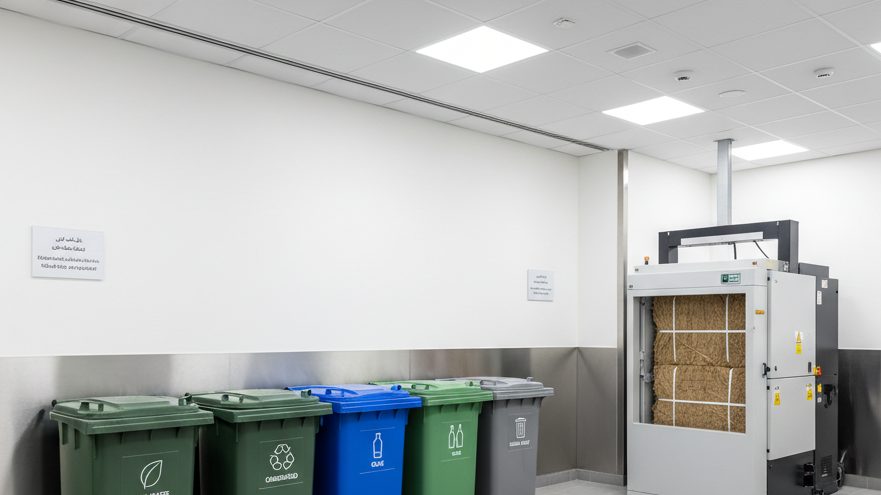
In short: Every business operating in the GCC generates waste — from office paper and packaging to production residues and hazardous materials. Managing that waste correctly is both a legal obligation and an operational efficiency opportunity.
Businesses that implement robust waste management programmes reduce compliance risk, lower disposal costs, improve their ESG credentials, and demonstrate to clients and investors that they operate responsibly. This guide provides a practical framework for businesses of any size to understand their waste obligations and implement effective waste management. Understanding Your Legal Obligations All businesses in the UAE are subject to Federal Law No. 12/2018 on Integrated Waste Management, emirate-level waste regulations, and sector-specific requirements (healthcare, hazardous waste, construction). Key universal obligations:
- Waste segregation: Dubai Municipality is progressively introducing source-segregation requirements for commercial premises, including food businesses. Check current Dubai Municipality publications to confirm whether and when your premises are in scope. Abu Dhabi’s regulations require commercial waste segregation as a condition of business licensing.
All GCC states are tightening commercial waste segregation requirements.
- Waste contractor licensing: All waste removed from your premises must be collected by a licensed waste contractor — not an informal collector. Using unlicensed waste collectors exposes businesses to fines and regulatory action.
- Hazardous waste: If your business generates any hazardous waste (chemicals, batteries, electronic equipment, fluorescent lamps, contaminated packaging), specific obligations apply: classification, labelling, storage limits, manifest documentation, and disposal through licensed channels. See Article 57 for detail.
- Record keeping: Businesses are required to maintain waste records (quantities generated by type, contractors used, disposal routes) for regulatory compliance and EPR scheme reporting. Conducting a Waste Audit A waste audit — systematically sampling, weighing, and categorising your business’s waste — is the essential first step in any waste reduction programme.
It reveals: how much waste you generate (the baseline), what it consists of (the composition), and therefore where the biggest reduction and recycling opportunities lie. A simple waste audit can be conducted in-house over two or three working days with basic equipment (scales, sorting table, waste categories list). Qualifrost provides professional waste audit services for businesses requiring independent, regulator-credible audit documentation.
References
Show all 2 sources
- Dubai Municipality (2022). Commercial Waste Management Guidelines. Dubai.
- UAE Federal Law No. 12 of 2018. Chapter 3: Obligations of Waste Generators. Abu Dhabi.