
Ballistic Separators: 2D and 3D Fraction Separation
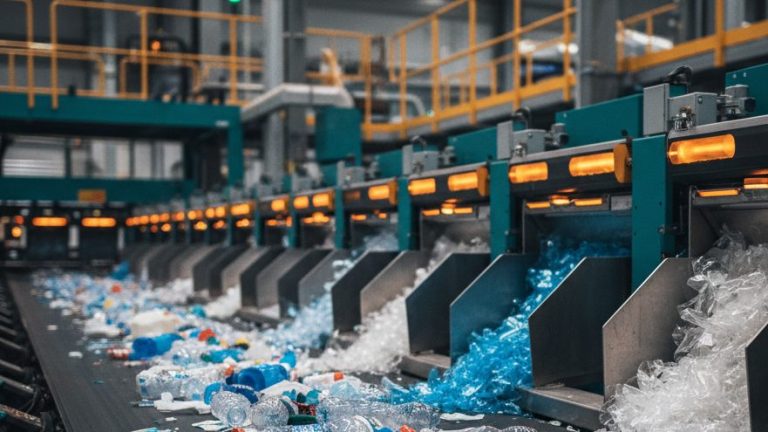
How a ballistic separator splits mixed waste into 2D, 3D and fines fractions, with specification ranges, paddle angle and speed settings, and the purity-versus-yield trade-off.
How a ballistic separator splits mixed waste into 2D, 3D and fines fractions, with specification ranges, paddle angle and speed settings, and the purity-versus-yield trade-off.
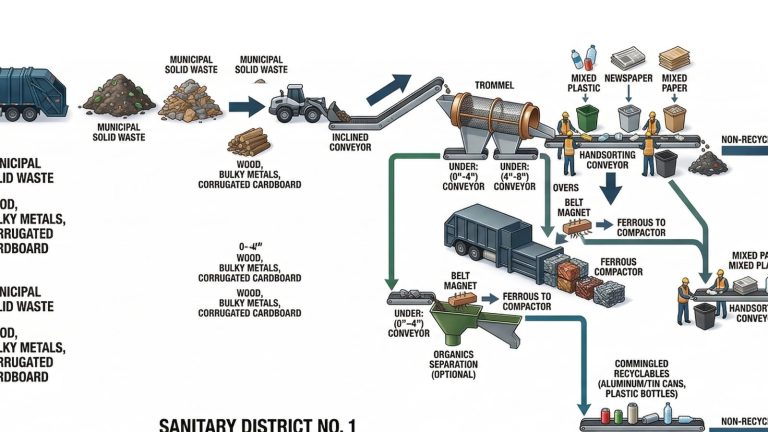
Explains how magnets and eddy current separators recover ferrous and non-ferrous metals, with recovery rates by particle size, why the magnet must come first, and how to specify and tune rotors for your feed.

How AI vision and robotic arms sort waste, what current systems deliver on pick rate, accuracy and cost, and where robots outperform optical sorting. Also covers how to build a business case that holds up against real feedstock.
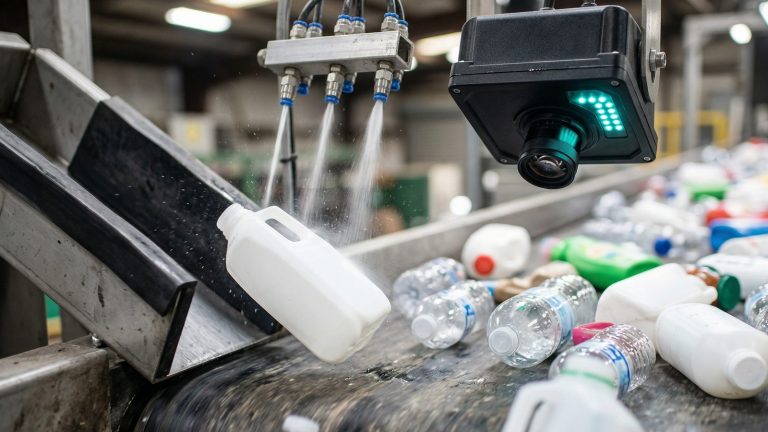
How NIR sorting identifies polymers, what accuracy and throughput are achievable, where it fails on black plastics and laminates, and how feedstock preparation and machine specification determine real-world performance.
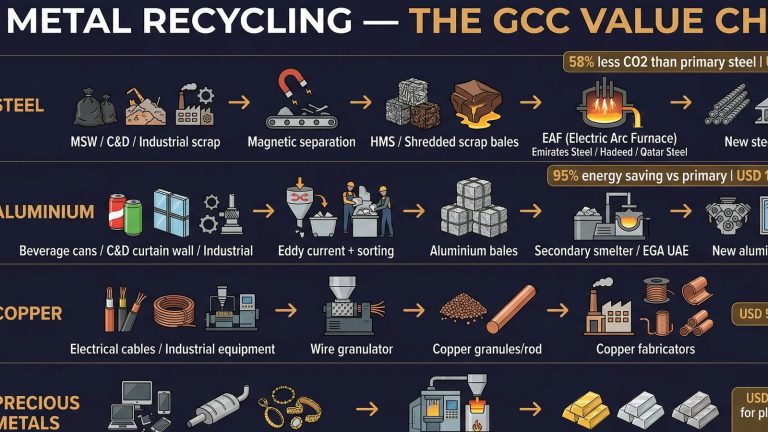
Compares manual picking, optical sorting and robotic systems on throughput, accuracy, cost, labour and safety, and shows how to set the right mix for a given feedstock and Gulf labour market.
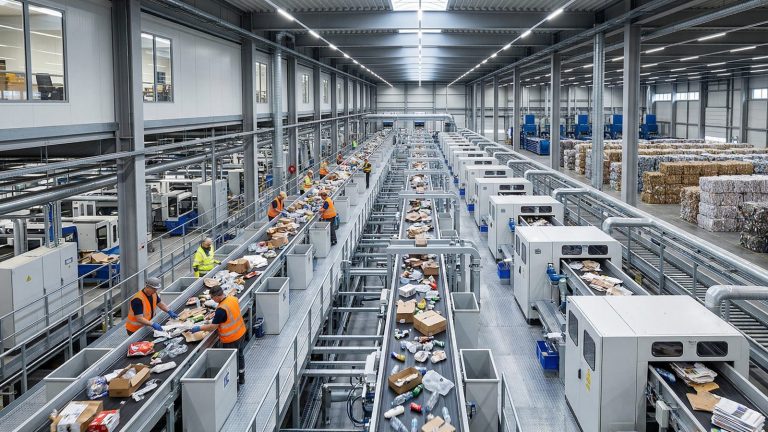
Explains how clean and dirty MRFs differ, how sorting equipment is sequenced, and why input quality, burden depth and residue disposal costs determine real throughput and recovery in UAE and Gulf plants.