Qualifrost_Admin

Qualifrost_Admin

Dubai Single-Use Plastics & Packaging Compliance Guide: Executive Council Resolution No. (124) of 2023

Cart of collected plastic waste

Dubai Executive Council Resolution No. (124) of 2023—operating alongside Federal Ministerial Resolution No. (380) of 2022—implemented a phased prohibition across all retail, hospitality, food delivery, and commercial establishments in Dubai: banning single-use plastic bags from 1 January 2024, non-plastic single-use bags below 50 microns from 1 June 2024, and single-use plastic stirrers, table covers, cups, styrofoam food containers, straws, and cutlery by 2025–2026.
Abu Dhabi Construction & Demolition (C&D) Waste SOP: Recycled Aggregate Quotas and Site Plans

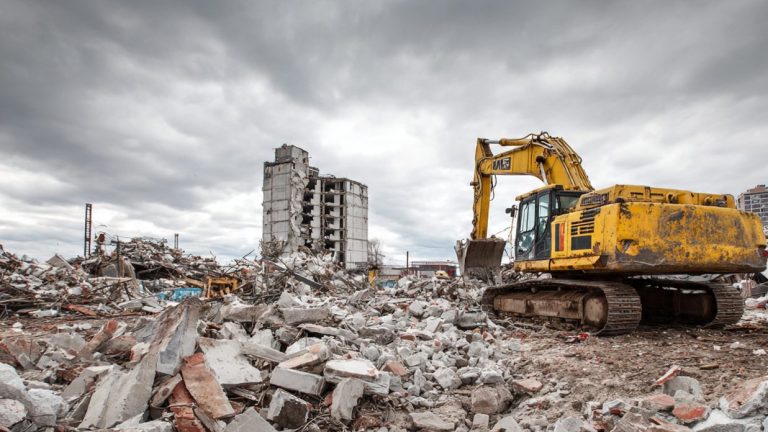
Excavator demolishing a building amid construction rubble

Under the Environment Agency – Abu Dhabi (EAD) Standard Operating Procedure for Construction and Demolition Waste and Tadweer Group operational rules, all construction, infrastructure, and demolition projects in Abu Dhabi must prepare a site Waste Management Plan (WMP), segregate inert concrete and masonry from wood, metals, gypsum, and hazardous waste, and route C&D mineral streams to approved crushing plants (such as Al Dhafra) to meet mandated recycled roadbase utilization quotas.

GCC Waste Infrastructure Market & Project Pipeline: WtE, MRF, Hazardous Treatment and PPP Investment Outlook

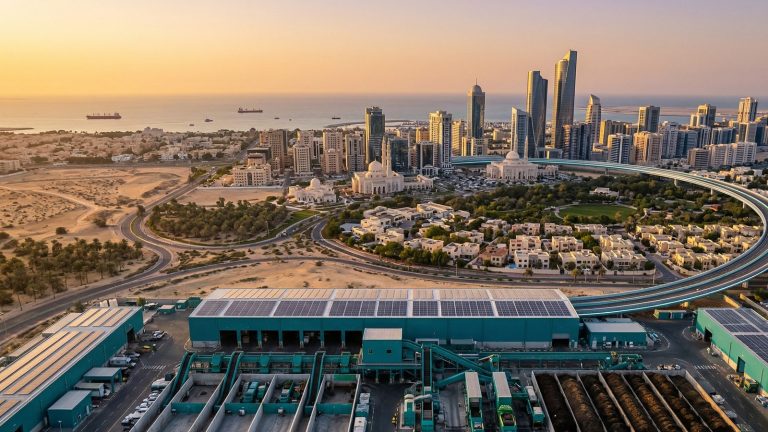
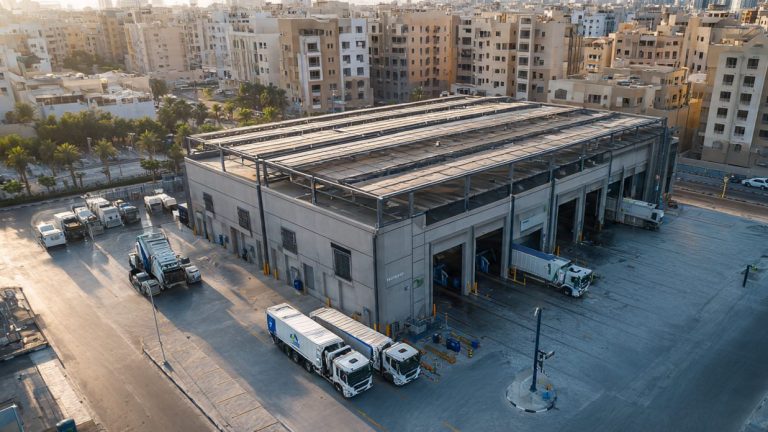
Aerial view of a waste handling facility in a Gulf city

Driven by binding 2027–2035 landfill diversion mandates and sovereign green finance, the GCC waste management infrastructure pipeline exceeds USD 35 to 45 billion in planned CAPEX through 2035. Flagship public-private partnerships (PPPs)—including the 1.9 Mt/yr Dubai Warsan WtE plant, the 300,000 t/yr Sharjah WtE plant, the 900,000 t/yr Abu Dhabi Al Wathba WtE project, Oman's Barka WtE, and Saudi Arabia's SAR 120 billion MWAN/SIRC build-out—anchor a structural shift from haul-and-dump contracts to long-term BOO/BOOT concessions.

Carbon Accounting & IPCC Waste Emission Factors: First-Order Decay (FOD), WARM Modelling andUAE MRV Compliance

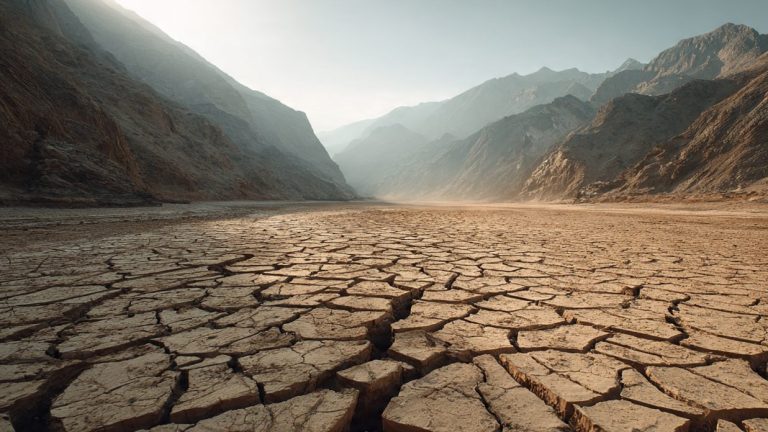
Parched cracked ground under a hazy sky

Under the 2006 IPCC Guidelines (and 2019 Refinement) for National Greenhouse Gas Inventories (Volume 5: Waste), the GHG Protocol, and UAE Federal Decree-Law No. (11) of 2024 (mrv.ae), solid waste disposal emissions are calculated using the First-Order Decay (FOD) kinetic model rather than instantaneous mass-balance factors. Because methane (CH₄) has a 100-year Global Warming Potential (GWP₁₀₀) of 27.9 to 28 (and 81.2 over 20 years under IPCC AR6), capturing landfill gas or diverting organics to composting/AD delivers rapid, quantifiable climate mitigation.

Secondary Raw Material Markets & Commodity Pricing in the GCC: OCC, rPET, Metals and Offtake Contracts

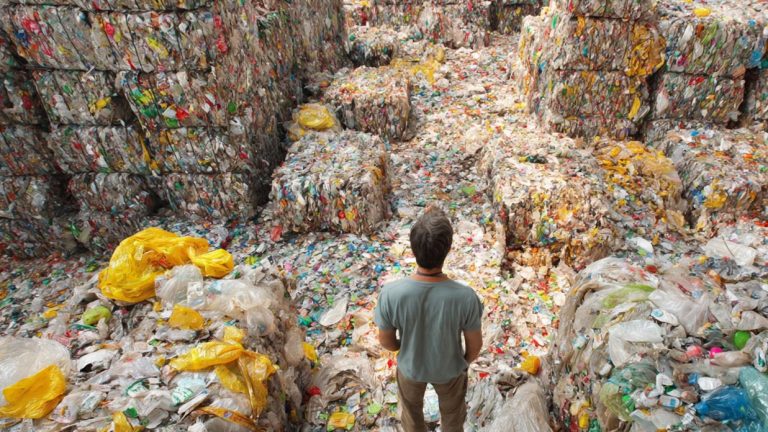
Stockpiled plastic bales awaiting sale as secondary raw material

A Material Recovery Facility (MRF) or recycling plant is only financially viable if its recovered outputs meet the purity specifications of industrial end-markets. In the GCC, the four deepest domestic secondary commodity markets are Old Corrugated Containers (OCC Grade 11/1.05) for regional paper mills, clear PET bottle bales and food-grade rPET pellets, ferrous and non-ferrous metals (aluminium UBCs, copper, steel scrap), and recycled C&D roadbase aggregates.

Recycling Rates & National Landfill Diversion Targets: Comparing UAE, Saudi Vision 2030, Qatar and Oman

Recycling facility supervisor checking throughput on a tablet

Every GCC member state has adopted ambitious national landfill diversion targets—led by the UAE (75%+ national diversion; 80% in Abu Dhabi by 2030; 100% landfill diversion in Dubai by 2027; ~90% achieved in Sharjah), Saudi Arabia (82% diversion by 2035 under MWAN), Qatar (85% diversion), and Oman (80% diversion under be'ah). Distinguishing between 'total landfill diversion' (which includes WtE, RDF, and C&D backfilling) and 'true material recycling' (ISO 59020 / EU Directive 2018/851) is essential for accurate benchmarking.

Gulf Waste Composition & Seasonal Variation: High Organic Moisture, Packaging Fractions and Calorific Value (LHV)

Waste sample sorted into composition categories

Typical Gulf municipal solid waste (MSW) comprises 35% to 50% organic food and kitchen waste, 15% to 22% paper and cardboard, 11% to 16% plastics, 3% to 5% metals, 2% to 4% glass, and 10% to 20% textiles, nappies, and fines. This composition yields an as-received Lower Heating Value (LHV) of 8.5 to 11.0 MJ/kg—well above the ≥6.5–7.0 MJ/kg threshold required for autothermal Waste-to-Energy combustion without auxiliary fuel.

GCC Waste Statistics & Per-Capita Generation: Country-by-Country Tonnages across UAE, KSA, Qatar, Oman, Kuwait and Bahrain

Aerial view of a Gulf city skyline

Across the six Gulf Cooperation Council (GCC) states, total solid waste generation exceeds 115 to 130 million tonnes per year when municipal solid waste (MSW), commercial & industrial (C&I), construction & demolition (C&D), and agricultural/oilfield wastes are combined. Per-capita municipal solid waste generation in the GCC averages 1.5 to 2.1 kg/person/day—roughly double the global average of 0.79 kg/person/day—creating an urgent operational driver for MRFs, C&D recycling, and Waste-to-Energy capacity.

Global Waste Generation Data: World Bank What a Waste 2.0 & UNEP 2024 Benchmarks Applied to MENA

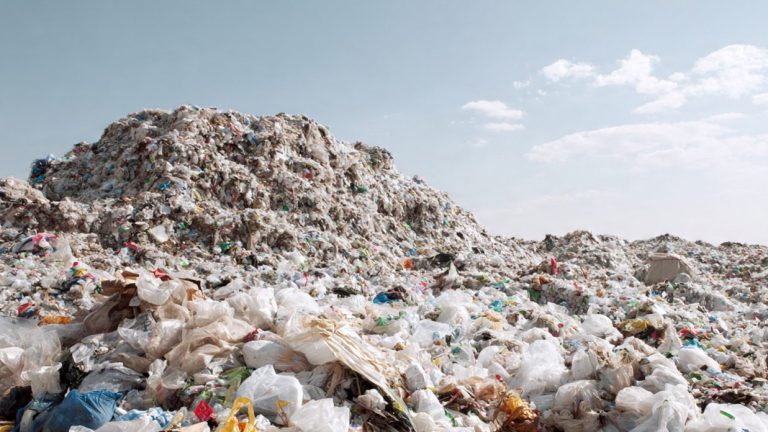
Mixed municipal waste at a disposal site

Global municipal solid waste (MSW) generation reached approximately 2.1 to 2.3 billion tonnes per year in 2023 and is projected by UNEP and ISWA to reach 3.8 billion tonnes by 2050 unless waste prevention decouples economic growth from material disposal. While the MENA region accounts for ~6% of global MSW by mass, high-income Gulf Cooperation Council (GCC) states exhibit among the world's highest per-capita urban generation rates (1.5 to 2.1 kg/person/day).

Desalination Brine Management & Zero Liquid Discharge (ZLD) in the Gulf: Outfall Diffusers, Brine Mining and MVR

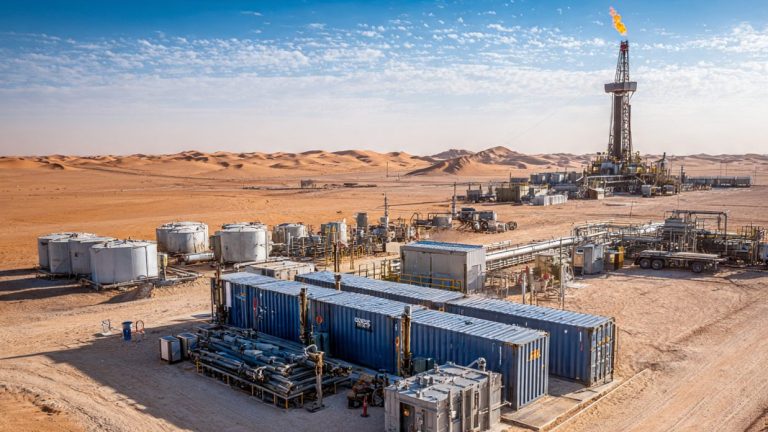
Desert industrial facility at sunset

The Arabian Gulf receives roughly half of the world's seawater desalination brine discharge (>70 million m³/day globally), typically at 1.5 to 2.0 times ambient seawater salinity (TDS 65,000–85,000 mg/L). Managing marine and inland brine impacts requires multi-port hydrodynamic outfall diffusers for coastal SWRO plants, and Minimum/Zero Liquid Discharge (MLD/ZLD) systems—using High-Pressure RO, Electrodialysis, Mechanical Vapour Recompression (MVR) evaporators, and crystallisers—for inland industrial and landfill leachate concentrates.