Qualifrost_Admin

Qualifrost_Admin

Treated Sewage Effluent (TSE) Reuse in the Gulf: District Cooling, Landscape Irrigation and Industrial Standards
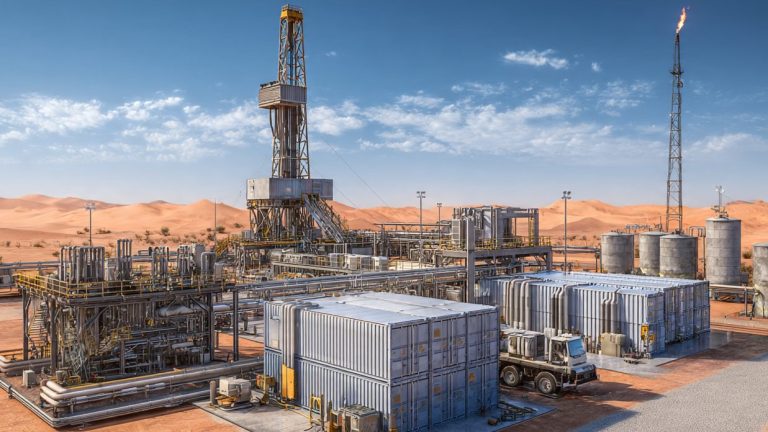
Desert process facility with storage tanks

Treated Sewage Effluent (TSE)—municipal wastewater polished through tertiary sand/membrane filtration and chlorine/UV disinfection—is a cornerstone circular water resource in the UAE and GCC. Substituting TSE for desalinated potable water in urban landscape irrigation, district cooling towers, concrete batching, and dust suppression saves ~3.5 to 4.5 kWh/m³ of desalination energy and aligns with the UAE Water Security Strategy 2036 target of 95% treated wastewater reuse.
Produced Water & Oilfield Liquid Waste Management in the GCC: Hydrocyclones, IGF, NORM and Deep-Well Injection

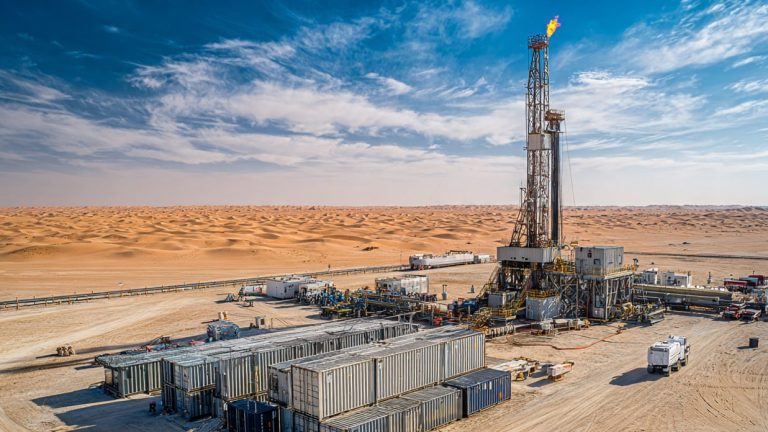
Desert drilling site with process facilities

Produced water is the largest by-product stream by volume in the Gulf oil and gas sector, often exceeding 3 to 5 barrels of hypersaline water (TDS 50,000 to >250,000 mg/L) per barrel of crude oil in mature reservoirs. Sustainable management requires three-phase separation, deoiling via liquid-liquid hydrocyclones and Induced Gas Flotation (IGF), ceramic/nutshell filtration, NORM (Naturally Occurring Radioactive Material) scale screening, and closed-loop Produced Water Re-Injection (PWRI) for reservoir pressure maintenance.

Sludge Dewatering, Drying and Thermal Valorisation: Belt Presses, Centrifuges, Solar and Thermal Dryers

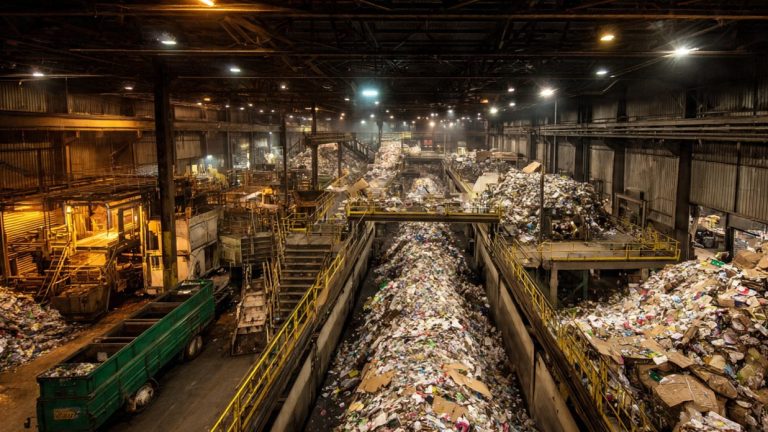
Industrial waste processing hall

Liquid sludges from municipal wastewater treatment plants (WWTPs) and industrial effluent plants contain 95% to 99% water by mass. Mechanical dewatering (via decanter centrifuges, screw presses, or filter presses) raises dry solids (DS) to 18%–30%, while solar greenhouse drying or indirect thermal drying achieves 75%–92% DS—slashing transport mass by up to 80% and enabling pathogen-free Class A biosolids or self-sustaining energy recovery in Waste-to-Energy and cement kilns.

Industrial Wastewater Treatment in Waste & Recovery Facilities: Equalization, DAF, Biological and Membrane Systems

Lined drainage channel on a waste site

Waste management facilities—including plastics wash plants, anaerobic digesters, composting halls, vehicle wash bays, and hazardous waste transfer stations—generate high-strength industrial trade effluents rich in suspended solids, oils, surfactants, COD, and ammonia. Meeting UAE and GCC sewer discharge or irrigation reuse limits requires a multi-stage treatment train combining screening, Equalization, Dissolved Air Flotation (DAF), biological treatment (MBR/MBBR), and tertiary filtration.

Plastic & Packaging Waste in the Gulf: Polymer Streams (PET, HDPE, PP, LDPE), Single-Use Bans and Recovery

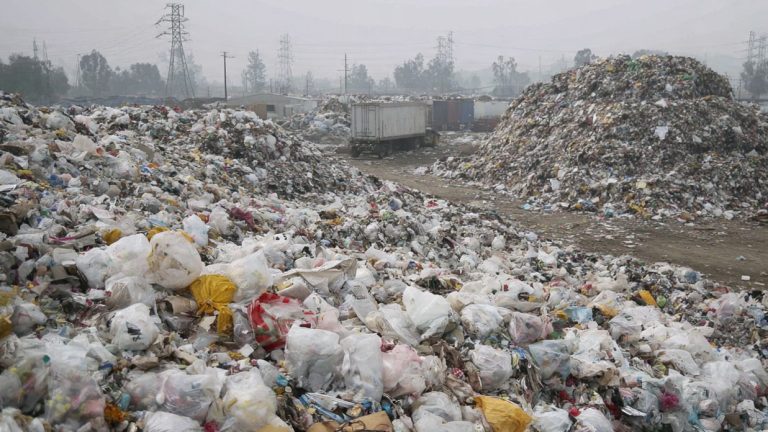
Large mound of mixed plastic and municipal waste

Plastic waste represents 11% to 16% by mass of municipal solid waste across the GCC, driven by high bottled-water consumption and retail packaging. Effective recovery depends on separating high-value rigid polymers—primarily Resin Code 1 (PET) and Resin Code 2 (HDPE)—from contaminated flexible films (LDPE/LLDPE), enforcing the UAE's 2024–2026 single-use plastics ban (MR 380/2022), and scaling food-grade bottle-to-bottle rPET plants.

Asia-Pacific & Australian Circular Benchmarks: Japan’s Sound Material-Cycle Society and Australian EPA Frameworks

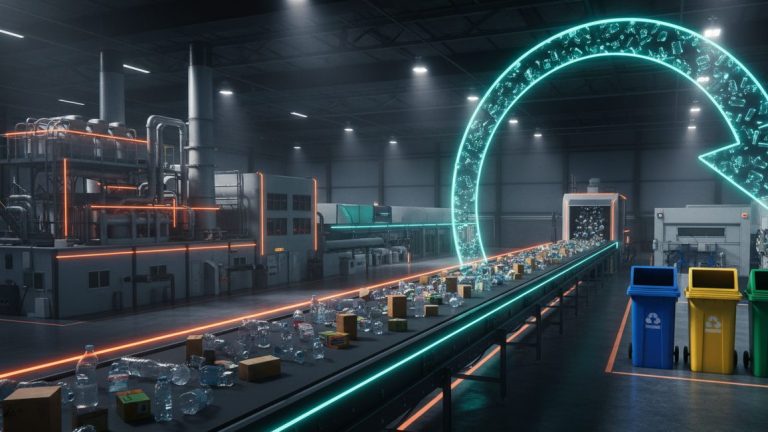
Recycling line returning recovered materials to sorted streams

Japan's Basic Act for Establishing a Sound Material-Cycle Society (2000) and stream-specific recycling laws (Home Appliances, Containers & Packaging, Construction Materials, Food, and End-of-Life Vehicles), alongside Australia's National Waste Policy Action Plan (80% recovery target by 2030) and state EPA landfill levies, provide proven models for high-density urban resource efficiency and arid-climate C&D recovery.

United States Waste Regulation Benchmark: RCRA Subtitle C & D, CERCLA (Superfund) and EPA Standards

Dozer working a municipal waste landfill

The United States federal waste framework rests on the Resource Conservation and Recovery Act (RCRA)—which divides regulation between Subtitle D (non-hazardous municipal solid waste landfills under 40 CFR Part 258) and Subtitle C ('cradle-to-grave' hazardous waste management under 40 CFR Parts 260–270)—supplemented by CERCLA (Superfund) strict joint-and-several remediation liability and Clean Air Act NSPS Subpart XXX landfill methane emission rules.

United Kingdom Waste Regulation Benchmark: Environmental Protection Act 1990 (s.34) and Environment Act 2021

Restored landfill in the English countryside

United Kingdom waste legislation—centered on Section 34 of the Environmental Protection Act 1990 (Duty of Care), the Environmental Permitting Regulations 2016, the Landfill Tax escalator, and the Environment Act 2021—demonstrates how fiscal pricing, strict operator competence (CIWM/WAMITAB), and digital waste tracking transform a landfill-dependent economy into an integrated recovery system.

European Union Waste Law Benchmark: Waste Framework Directive 2008/98/EC, Landfill Directive and EWC Codes

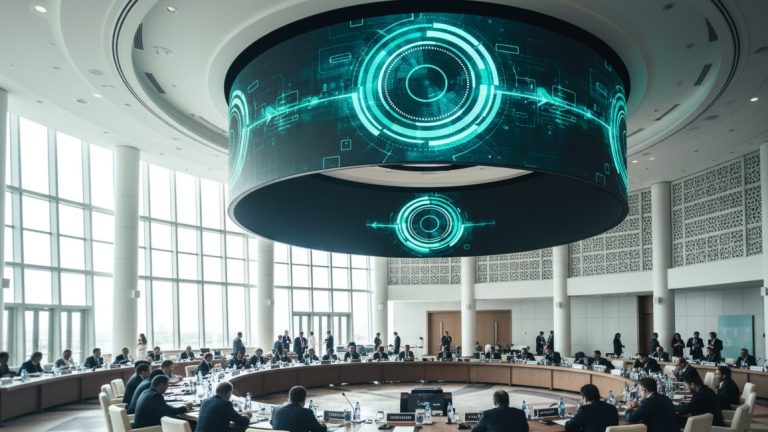
International policy conference on resources and waste

The European Union's waste legislative acquis—anchored by the Waste Framework Directive (2008/98/EC, amended by 2018/851), the Landfill Directive (1999/31/EC), and the European List of Waste (Decision 2000/532/EC)—serves as the primary technical reference for waste classification, End-of-Waste criteria, and landfill engineering across the GCC, including Abu Dhabi EAD's six-digit waste coding system.

UAE Free Zone Environmental & Waste Compliance: JAFZA/Trakhees, KEZAD, DMCC, SAIF Zone and AFZ

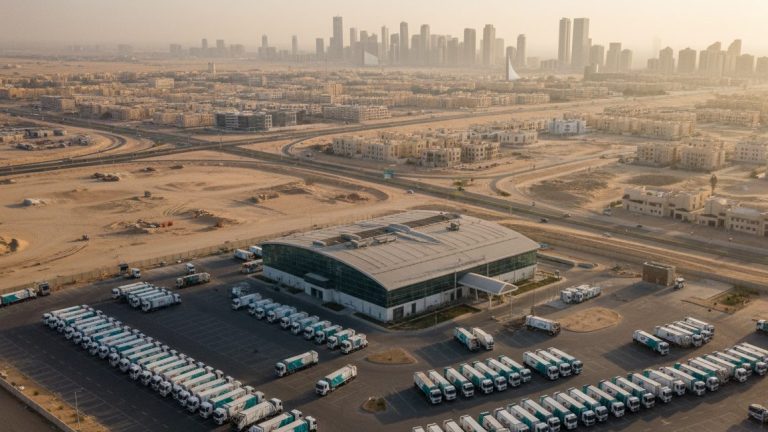
Vehicle depot in a Gulf industrial zone

Operating inside a UAE free zone does not exempt a business from UAE federal environmental and climate laws. Both Federal Law No. (12) of 2018 on Integrated Waste Management (Article 3) and Federal Decree-Law No. (11) of 2024 on Climate Change (Article 3) expressly apply across all UAE free zones, while free zone authorities (such as PCFC/Trakhees in JAFZA, EAD/KEZAD in Abu Dhabi, SAIF Zone in Sharjah, and Ajman Free Zone) enforce additional zone-level EHS permits, inspections, and waste manifest rules.